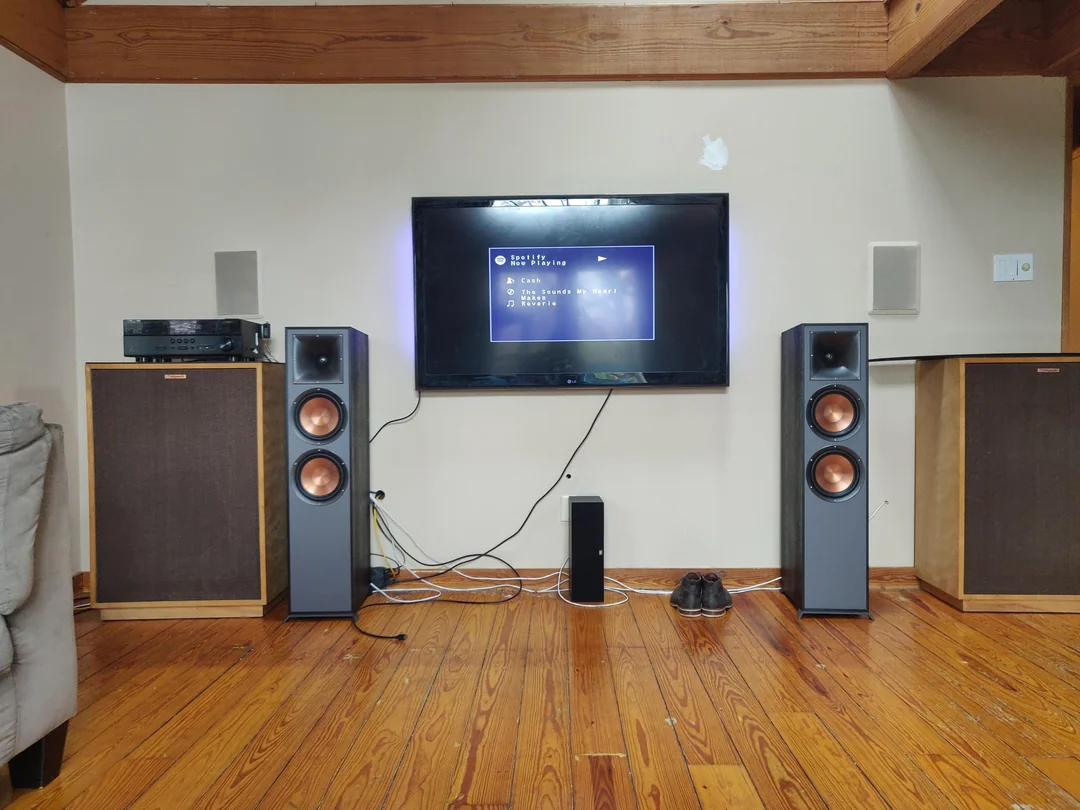
Living rooms have become tougher tests for audio gear than many people expected. A TV soundbar can carry dialogue, but it rarely gives a movie night that chest-level weight people remember from a theater. That is why the Klipsch Reference R 820F Tower Speaker is getting attention again as U.S. shoppers watch for fresh stock, bundle pricing, and pair availability. This is not only about loudness. The pull comes from buyers wanting home audio speakers that can handle movies, vinyl, streaming, and weekend sports without turning the room into a rack of gear. For readers tracking home audio gear coverage, the bigger question is not whether the R-820F looks impressive. It does. The better question is whether it fits your room, your receiver, and the way you listen. The answer depends on space, placement, and honest expectations. A big cabinet can solve some problems, but it can also expose weak setup habits fast.
Why the Tower Speaker Restock Feels Different This Time
Restocks create a certain kind of pressure. You see a familiar model return, you remember seeing it lower once, and suddenly every retailer page feels like a countdown. With the Klipsch R-820F, that pressure makes sense because it sits in a sweet spot many American buyers understand: big enough to feel like a serious upgrade, yet still reachable for people building a living-room system one piece at a time.
The twist is that demand for home audio speakers has changed. People are not only buying for a basement theater anymore. They are putting stronger systems in open-plan living rooms, apartment media corners, spare bedrooms, and garage hangouts. That broad use case matters because floorstanding speakers behave differently across those spaces.
Home audio speakers are carrying more of the room now
A decade ago, plenty of shoppers treated large left and right speakers as a niche purchase. The TV got bigger, the soundbar sat below it, and that was enough. Then people began watching more streaming films, sports, concerts, and YouTube performances at home. Weak TV sound became harder to ignore.
The R-820F enters that moment with a simple promise: scale. Klipsch lists the model with dual 8-inch spun-copper IMG woofers, a 1-inch aluminum LTS tweeter, and a 90 x 90 Tractrix horn, which explains why shoppers expect a more forward sound than a slim TV bar can produce. Its official dimensions are about 43 inches tall, 10.9 inches wide, and 17.5 inches deep, so this is not furniture you hide by accident.
That size is part of the appeal. In a U.S. family room with a 65-inch TV, a pair can visually frame the screen and make the setup feel finished. In a small apartment, the same pair may feel bold before you even press play. That is the first buyer lesson: the restock is exciting, but your room still gets the final vote.
Klipsch R-820F demand is not only about volume
The obvious assumption is that people want the Klipsch R-820F because it gets loud. That is partly true. Its rated sensitivity is high, and the spec sheet lists 97 dB at 2.83V/1m with 150 watts continuous and 600 watts peak power handling. Those numbers suggest it can play with energy even when paired with many normal home theater receivers, not only expensive separates.
Here is the less obvious part: buyers are often chasing ease, not maximum output. A more sensitive speaker can feel alive at lower volume, which matters in a house where one person wants a full movie experience and someone else is asleep upstairs. You may not need the system loud. You may need it to sound awake.
That is why restock demand can build around an older, known model instead of a brand-new release. Shoppers trust what has been talked about, measured, reviewed, discounted, and argued over. Familiar gear feels safer when you are spending real money and trying to avoid returns on heavy boxes.
How the Klipsch R-820F Fits Real U.S. Rooms
A speaker does not perform in a brochure. It performs near a couch, beside a media console, over hardwood, next to drywall, and under the habits of the people using it. That is where many buyers get tripped up. They read the specs, see the copper woofers, and forget the most personal part of audio: the room is part of the system.
The R-820F has the physical presence of serious floorstanding speakers. That presence can be a gift in a long living room, but it needs breathing room. Place it carelessly, and the same traits that make it exciting can turn pushy. Strong output, rear porting, and reflective rooms can become a messy trio.
Floorstanding speakers need space before they need power
The R-820F uses a rear-firing Tractrix port, so wall distance matters. Shove the cabinet tight against the back wall, and the bass may gain weight while losing shape. Pull it forward, even a bit, and the low end often becomes easier to follow. This is where a tape measure beats a new receiver.
A practical example: in a 14-by-18-foot living room, a pair placed slightly forward from the media wall, angled toward the main couch, can sound more focused than the same pair pushed flat against furniture. The change may cost nothing. It may also do more than swapping speaker wire, buying isolation pads, or chasing another small accessory.
There is a counterintuitive lesson here. Bigger speakers do not always need bigger rooms because they are loud. They need better placement because they interact with the room more strongly. A compact bookshelf speaker may forgive a bad corner. A full cabinet often tells on you.
Bass expectations should match the space you live in
The official frequency response for the R-820F is listed at 35 Hz to 21 kHz, plus or minus 3 dB. That is a wide range for a passive floorstander in this price class, and it explains why many buyers hope they can skip a subwoofer. In some rooms, for some listening, they can. In others, not quite.
A pair may give rock, country, pop, and movie trailers enough weight for daily use. Deep action-film effects are a different story. The floor may not rumble the way a dedicated sub handles it, especially below the range where big cinematic effects live. That does not make the R-820F weak. It means the job is different.
For apartment buyers, this can be good news. Clean punch without nonstop sub-bass can be neighbor-friendlier than a separate sub turned too high. For suburban basements, the opposite may be true. You may want the R-820F for the front stage and a subwoofer for the bottom octave. Matching the tool to the room is where grown-up audio starts.
What to Check Before Buying During a Restock
A restock can make people sloppy. The page says available, the price looks fair, and the finger moves faster than the brain. Slow down for five minutes. Large speakers are not like earbuds. They are heavy, visible, and tied to the rest of your system. A return can mean repacking tall cartons and hoping nothing gets scuffed.
This is where the best buyers act less like bargain hunters and more like installers. They check quantity, receiver match, placement, finish, and delivery details. It sounds dull. It saves money.
Check pair pricing, single-unit listings, and delivery terms
Many floorstanding speakers are sold individually, and that can confuse shoppers who are used to buying pairs. The Klipsch R-820F appears across retailers in single-speaker listings, so the first thing to confirm is whether the price is for one cabinet or two. A deal that looks wild may be half the system you thought you were buying.
Also check freight handling. A speaker around this size is not a small porch package. Some buyers need delivery to an apartment building, a second floor, or a house with no covered entry. If bad weather hits on delivery day, a box left outside can turn a great price into stress.
Use the same care with returns. If a retailer requires original packaging, keep the boxes until you know both cabinets work, match cosmetically, and fit your room. It is boring advice. It is also the kind of advice people wish they followed after the first dented corner.
Match the receiver before chasing a louder system
The R-820F is listed as 8 ohms compatible, which is friendly for many home theater receivers. That does not mean every setup will sound the same. A basic AVR can run a pair for TV, music, and casual movie nights, while a better receiver or amplifier may control the sound with more grip at higher levels.
Do not buy power for bragging rights. Buy stability, clean setup options, and enough headroom for your room. If your seating is nine feet away in a normal living room, you may not need a monster amp. If your space opens into a kitchen, hallway, and dining area, the system has more air to energize.
One more detail gets missed: center-channel matching. If you build a home theater around strong left and right speakers but keep a thin center, dialogue can feel smaller than explosions. A better front stage often starts with balance, not volume. For more setup planning, add this to your home theater receiver buying checklist before ordering.
Getting the Best Sound After the Boxes Arrive
The first hour with new speakers is emotional. You unbox them, admire the copper cones, connect the wire, and play the song you always use as a test. That moment matters. It also lies a little. Fresh placement, room reflections, receiver settings, and listening height can all shape the first impression.
The R-820F rewards people who make small adjustments. Not fussy ones. Sensible ones. You are not tuning a recording studio. You are helping the speakers act like part of the room instead of two tall objects shouting from the front wall.
Start with placement before changing settings
Begin with symmetry. Put the pair at similar distances from the main seat, keep the tweeters near ear height when seated, and angle the cabinets inward slightly. Then listen. If the center image feels vague, toe them in a bit more. If the highs feel too direct, ease them outward.
A real-world test works better than a chart. Play a familiar vocal track, then a scene with steady dialogue, then a bass-heavy song you know well. If the singer seems locked near the screen and the bass does not smear into a corner, you are close. After that, run room correction if your receiver has it.
The non-obvious move is to avoid fixing every issue in the menu first. Receiver settings can help, but they should not be asked to repair poor placement. Physical setup is the foundation. Software is seasoning.
Protect your hearing while enjoying the scale
Large speakers can make loud listening feel effortless, and that is part of the fun. It is also where people lose track of volume. Because the sound stays clean, your ears may not warn you right away. The National Institute on Deafness and Other Communication Disorders explains that loud noise exposure can damage hearing over time, so it is worth treating volume as part of responsible ownership through safe listening guidance from NIDCD.
This does not mean you have to turn movie night into a lecture. It means you should set sane limits, especially during long sessions. If you feel ear fatigue after an album or a game, the system is telling you something. Turn it down, adjust the treble, or sit farther back.
Good audio should invite you to listen longer, not punish you for enjoying it. That is the quiet difference between a system that impresses guests for ten minutes and one you live with for years. A useful speaker placement tips guide can help you make those changes without buying another box.
Conclusion
The R-820F restock matters because it meets a buyer mood that is easy to understand. People want stronger sound at home, but they do not always want a complicated stack of gear. They want movies to feel wider, music to carry weight, and everyday TV to stop sounding trapped inside a flat panel.
That does not make this a blind buy. The cabinet is large, the sound has personality, and the room will shape the result. A careful shopper should confirm pair pricing, check placement space, match the receiver, and think through delivery before chasing the first available listing. That is why the Tower Speaker conversation is less about hype and more about fit.
For the right U.S. living room, the Klipsch R-820F can be the kind of upgrade that makes home audio feel physical again. Buy it with a plan, set it up with patience, and let the room prove whether the restock was worth your attention.
Frequently Asked Questions
Is the Klipsch R-820F good for home theater?
Yes, it can work well as the left and right front channels in a home theater system. It has strong output, a large cabinet, and enough presence for movie soundtracks. Pairing it with a matching center channel matters if dialogue clarity is your top concern.
Do I need a subwoofer with the Klipsch R-820F?
A subwoofer is optional for music and casual TV, but it helps for deep movie effects. The R-820F can produce strong bass for its category, yet a dedicated sub handles the lowest home theater impact with more authority.
How much room does the Klipsch R-820F need?
It needs enough space to sit away from the back wall and breathe around the sides. Small rooms can still work, but placement becomes more sensitive. Measure depth, walkway clearance, and distance from your main seat before ordering.
Is the Klipsch R-820F sold as one speaker or a pair?
Retailers often list this model as a single cabinet, not a pair. Always read the listing title, quantity, and cart details before checking out. Many price mistakes happen because shoppers assume two are included.
What receiver works with the Klipsch R-820F?
Most quality home theater receivers rated for 8-ohm speakers can run it for normal living-room use. Better receivers may offer cleaner control at higher levels. Match the receiver to your room size, listening habits, and full speaker setup.
Is the Klipsch R-820F too large for an apartment?
It can be large for some apartments, especially narrow rooms or shared-wall spaces. The bigger issue is not only size, but bass control and volume discipline. Careful placement and moderate listening can make it more apartment-friendly.
Why are Klipsch speakers popular for movies?
Klipsch speakers are known for lively dynamics and horn-loaded tweeter designs that can make dialogue, effects, and music feel direct. That character suits many movie watchers who want energy and scale from their front speakers.
Should I wait for a sale or buy during a restock?
Buy during a restock only when the price, return terms, and quantity make sense. Waiting can help if discounts return, but stock may move fast. Set a target price and avoid panic buying from unclear listings.