
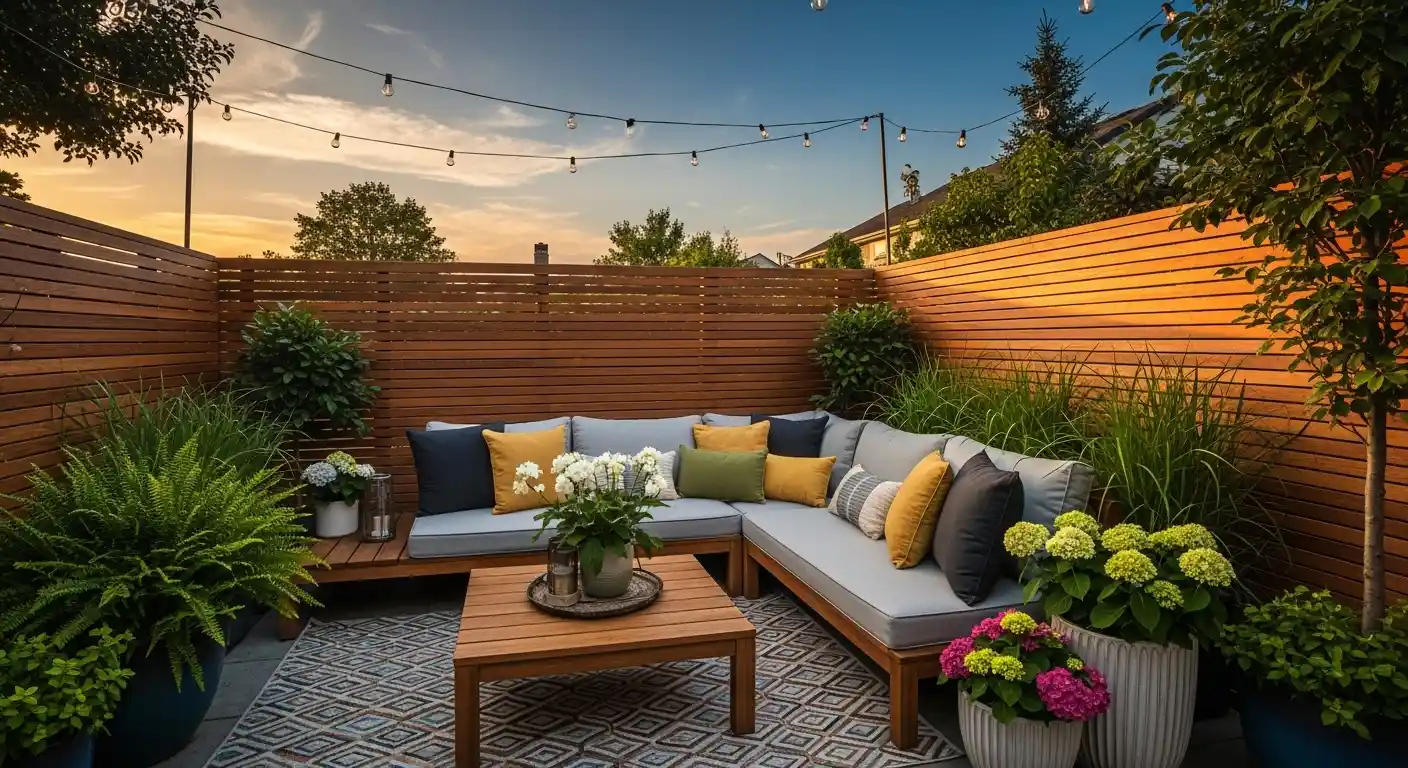
Your yard should not feel like a stage where every neighbor, delivery driver, and second-story window gets a front-row seat. A peaceful outdoor space starts when you can sit down with coffee, let the dog roam, or eat dinner outside without feeling watched. That is why Backyard Privacy Ideas matter so much for American homeowners who want comfort without turning their property into a closed-off bunker. Privacy is not only about fences; it is about shaping sightlines, softening noise, and giving your home a calmer edge. A good plan also respects the way people actually live in the USA, where lot sizes, HOA rules, climate zones, and neighbor relationships can change from one street to the next. Even a helpful local resource for home and lifestyle visibility can remind homeowners that curb appeal and comfort often grow from small, well-placed improvements. The goal is not to hide from the world. The goal is to choose what parts of your home life stay yours.
Backyard Privacy Ideas That Start With Smarter Boundaries
Privacy begins at the edge of the space, but the edge does not always need to be a tall wall. Many homeowners make the mistake of thinking their only choices are a full fence or no privacy at all. The better move is to study where the exposure actually comes from. A ranch home in Arizona, a narrow townhouse yard in New Jersey, and a split-level property in Ohio all need different answers. The smartest boundary responds to the view, the local rules, and the way your family uses the yard.
Privacy fence ideas that work without making the yard feel boxed in
A fence can solve a real problem fast, but a flat six-foot panel on every side can make a yard feel smaller than it is. Better privacy fence ideas start with placement. You may only need full coverage along the side facing a neighbor’s patio, while the back edge can stay lighter with a lower fence, open lattice, or planted border.
Material matters more than people admit. Wood feels warm and natural, but it needs sealing, staining, and occasional repair in many U.S. climates. Vinyl handles moisture better in places with wet winters, while composite fencing can offer a cleaner look with less upkeep. The best choice is not the fanciest one. It is the one you will still like after five summers and two storms.
Good privacy fence ideas also think about airflow and light. A fence with small spacing, staggered boards, or upper lattice can block direct views without killing the yard’s openness. That detail matters in hot states where air movement keeps outdoor areas usable. Privacy should not turn your backyard into a storage box with chairs.
Outdoor privacy screens for targeted coverage
Outdoor privacy screens are the scalpel of backyard design. They solve one exact problem instead of changing the entire property line. A screen beside a hot tub, grill station, patio table, or lounge chair can block the view that bothers you most while leaving the rest of the yard open.
Movable screens work well for renters or homeowners who do not want a permanent build. Freestanding wood panels, metal screens, tall planters, and weather-safe fabric dividers can shift as your needs change. This is useful in smaller city lots, where one neighbor’s deck may feel too close in spring but becomes hidden once trees leaf out in summer.
Permanent outdoor privacy screens can also carry style. A slatted cedar panel near a deck feels intentional, not defensive. A powder-coated metal screen with a simple pattern can add structure without looking heavy. The trick is restraint. One well-placed screen often looks better than a yard filled with panels trying too hard.
Use Plants to Create Privacy That Feels Alive
Hard boundaries solve sightlines, but plants change the mood. Green privacy feels softer, absorbs sound better, and gives a yard the feeling of retreat without making it look guarded. Still, planting for privacy takes patience and judgment. A row of shrubs looks charming at the nursery, then becomes a maintenance problem if you choose the wrong plant for your climate, soil, or yard width.
Backyard landscaping privacy with layered planting
Backyard landscaping privacy works best in layers, not in a single row of identical shrubs. A layered border might place taller evergreens toward the back, flowering shrubs in the middle, and ornamental grasses or perennials near the front. The result blocks views at different heights while looking like a garden instead of a green wall.
This method helps across many American regions because it can adapt. In the Pacific Northwest, dense evergreens may thrive. In parts of Texas or Southern California, drought-tolerant shrubs and tall grasses may make more sense. In colder Midwest states, homeowners often mix evergreens with deciduous shrubs so the yard does not feel bare in winter.
Strong backyard landscaping privacy also considers the seasons. A yard that feels hidden in July may feel exposed in January if every plant drops its leaves. Adding a few evergreen anchors prevents that empty winter look. Privacy should not disappear when the weather gets honest.
Fast-growing plants are tempting, but choose carefully
Fast growth sounds like a gift when you want privacy now, but it can become a headache later. Some fast-growing plants spread aggressively, need constant trimming, or outgrow small yards. A plant that promises quick coverage may also steal space, sunlight, and weekends.
A better plan is to mix faster growers with slower, steadier plants. Tall grasses can offer coverage while shrubs mature. Container bamboo can work in some settings, but in-ground running bamboo can become a serious problem if not controlled. Homeowners should check local extension guidance before planting anything with a reputation for spreading.
Plant spacing deserves patience. Crowding shrubs for instant coverage often leads to disease, weak growth, and expensive removal later. Give plants room to reach their mature size. The first year may look a little sparse, but the fifth year will thank you.
Design Privacy Around How You Actually Use the Yard
A private backyard does not need equal privacy everywhere. Most families only need coverage where life happens. The patio, fire pit, pool edge, garden bench, and dining area deserve more attention than the unused strip behind the shed. Designing around behavior saves money and creates a yard that feels personal instead of overbuilt.
Small backyard privacy that protects the best seat first
Small backyard privacy begins with one honest question: where do you actually sit? In compact yards, trying to hide every angle can make the space feel cramped. Protecting the main seating zone first gives you the biggest emotional payoff with the least construction.
A corner bench with a high back, a pergola curtain, or a screen behind a dining set can create a pocket of comfort. The rest of the yard can stay open enough for light, movement, and visual breathing room. This works especially well in townhome communities, where fences may be limited and neighbors sit close by.
Small backyard privacy also benefits from vertical thinking. Wall-mounted planters, trellises, climbing vines, and narrow screens add coverage without stealing ground space. The floor area stays usable, which matters when every square foot already has a job.
Pergolas, curtains, and shade structures can block views from above
Second-story windows are a different privacy problem. A fence will not help when the view comes from above. In many suburban neighborhoods, this is the real issue. You may have a fenced yard and still feel exposed because a neighbor’s upper window looks straight down into your patio.
A pergola with climbing plants, shade cloth, or outdoor curtains can soften that overhead exposure. It does not need to cover the entire yard. Cover the table, lounge area, or spa zone, and suddenly the space feels more protected. Partial overhead privacy often feels more natural than trying to build taller and taller barriers.
Shade structures also add comfort in warm parts of the USA, where sun control matters as much as privacy. A pergola over a west-facing patio can make dinner outside possible during late summer. That is the kind of upgrade that earns its keep twice.
Balance Privacy, Neighbor Relations, and Local Rules
Privacy is personal, but yards exist in public view. A smart homeowner protects comfort without starting a silent cold war across the fence line. Local codes, HOA standards, drainage rules, and property-line issues can turn a simple privacy project into a costly mess if you skip the boring details. Boring details often save the most money.
Check rules before you build anything permanent
Many U.S. cities limit fence height, front-yard screening, and corner-lot visibility. HOAs may control materials, colors, plant types, and even the side of the fence that faces outward. A fence that looks perfect on Saturday can become a violation notice by Tuesday if you ignore the rules.
Permits also matter. Some areas allow fences under a certain height without formal approval, while others require review for any property-line structure. Pools may bring separate safety requirements. Before spending money, check your city or county website and read your HOA documents if you have them.
Property lines deserve respect. Guessing based on old fence posts, mowing patterns, or a neighbor’s memory can cause trouble. A survey may feel like an annoying expense, but moving a fence after a dispute costs far more. Peaceful privacy starts with clean boundaries in every sense.
Make the neighbor side look intentional
Privacy projects affect the people around you, even when the work stays on your land. A tall blank wall facing a neighbor can feel hostile. A neat fence, planted border, or finished screen feels like care. The difference matters.
Talking to a neighbor before a major build can prevent tension. You do not need permission for every legal project, but a simple heads-up keeps things human. Most people react better when they hear your plan before they see contractors and post holes near the property line.
The best privacy choices improve both sides when possible. A mixed hedge, attractive fence face, or shared concern about a sightline can turn a private project into a small neighborhood win. You get comfort, and the yard still feels like part of a living street, not a fortress.
A peaceful yard does not happen by accident. It comes from noticing where your space feels exposed, then solving that exact problem with care instead of panic. Backyard Privacy Ideas work best when they combine boundaries, plants, screens, shade, and good judgment into one clear plan. You do not need to spend a fortune or block every view to make your home feel calmer. Start with the spot where you feel least relaxed, whether that is the patio table, side yard, pool edge, or back fence. Fix that first, then let the rest of the yard evolve with time. The next step is simple: walk outside today, stand where you most want peace, and decide what one change would make that place feel like yours again.
Frequently Asked Questions
What are the best backyard privacy ideas for small yards?
Focus on one seating area instead of trying to cover the whole yard. Tall planters, narrow trellises, outdoor curtains, and slatted screens can block the most exposed views without eating up floor space. In a small yard, targeted privacy almost always beats bulky full-yard barriers.
How can outdoor privacy screens improve a patio?
Outdoor privacy screens can block direct views from nearby decks, sidewalks, or neighboring patios while keeping the space open. They work well beside dining sets, grills, hot tubs, and lounge areas. Choose weather-safe materials so the screen looks intentional after rain, sun, and seasonal wear.
What privacy fence ideas are best for suburban homes?
Suburban yards often need a mix of solid panels and softer details. Board-on-board fencing, horizontal slats, upper lattice, and planted fence lines can provide privacy without making the yard feel closed in. Always check local height rules and HOA standards before choosing a design.
How does backyard landscaping privacy work in winter?
Evergreens carry the privacy load when deciduous plants lose their leaves. A strong winter plan usually mixes evergreen shrubs, small trees, ornamental grasses, and structural fencing. This keeps the yard from feeling exposed once summer growth disappears.
What is the cheapest way to add backyard privacy?
The cheapest option is usually targeted screening. A few tall planters, a fabric shade panel, a trellis with climbing vines, or a freestanding screen can solve one exposed area without major construction. Start where you sit most often, not along every property line.
Can renters create small backyard privacy without building?
Renters can use movable planters, folding screens, outdoor curtains, shade sails, and potted shrubs. These options avoid permanent installation and can move when the lease ends. Always check the lease before attaching anything to fences, walls, balconies, or shared structures.
Are plants better than fences for backyard privacy?
Plants feel softer and can improve the mood of a yard, but fences provide faster and more predictable coverage. The strongest solution often combines both. A fence blocks the view now, while plants add texture, seasonal interest, and a less rigid look over time.
How tall should a backyard privacy screen be?
Most seating areas need coverage around five to six feet high, but second-story views may require overhead solutions like pergolas, shade cloth, or climbing plants. Local rules may limit height, so check city codes or HOA documents before installing anything permanent.